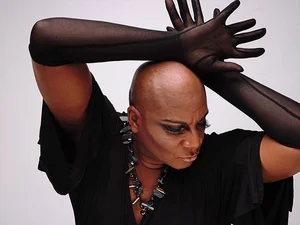
Black Devil Magick
Why you probably think Hoodoo is “Devil” stuff — for realz!
When I talk about rootwork, I’m sure a lot of you start scratching your heads. That’s another tragic side-effect of White Supremacy. Y’all are like “WTF?” You might want to sit down for this, I’m gonna talk about slavery. One of the effects of White Supremacy and racism is that, while we can see the enslavement of a people and 400 years of subjugation as fucked up, most conversations are left off there. What we miss are the full implications of slavery as loss and or demonization of culture.
Why would it matter? Those Africans were primitive savages...blah, blah, blah! But of course no one believes that, right? We understand the full humanity of everybody. Black people were not only subjugated, but became objects of contempt, fear and humor. That’s grimy, right? So, why we still accept (embrace) stereotypes about African culture when we actually know shit about it, or even the culture enslaved Africans developed in spite of attempts to repress the shit out ‘em. I know I’m speaking for myself, but we’ll see. I think denying our negative attitudes about all things African American is sweeping a big part of the problem under the rug.
African culture (now Black culture) been almost completely stereotyped, homogenized, fetishized, criminalized or caricaturized. American society knows squat about authentic African culture. I suspect a majority of U.S. citizens (including Black people) still think Africa is a country. It’s jacked up most people know little to zip about the culture that helped Blacks survive most o’ the last 400 years (spiritual and healing traditions, agriculture, mutual aid, etc.).
The White Supremacy machine did a great job of making Black people into boogeymen. I grew up terrified of any Black people I didn’t know personally. Black people were those scary people on TV. I still have to check the impulse to lock my car door in a Black neighborhood. Black spirituality was a joke and a spoof of Christianity. Folks miss the fact Christianity practiced by Black Americans is an expression of African spirituality. When Exodus, or Psalms is read or recited in Black churches, it‘s a whole different meaning than in Anglo tradition.
My practice of rootwork is my attempt to reclaim a truly Black expression. I don’t want to disparage Hip Hop and R + B, but those forms, to me repackage the White gaze for Black consumption. I want to discover what Blackness might be like in the absence of the White gaze. The practices that were, for the most part, kept in secret.
I’m looking for accomplices.