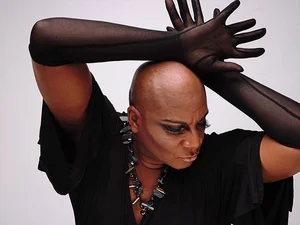
Coming Out in Opposite Land
Coming out as trans to family can be a nightmare, y’all — for realz!
My gender liberation is one aspect of my lived experience. It’s been central as I continue to learn about what’s to come. Coming out to family was a big hurdle. Whatever resentment or denial, my family knows me fundamentally—suppress the truth as they might. That’s an indictment of all families regarding their kids. Working to mold your children, you have all the information you need to support and encourage authenticity. Why you fucking it up?
For decades my family resisted the fact of me. They must have been terrified, and the response to my radical uniqueness, was to strike out at it: the fear. It didn’t help they were—and still are—coping with their own generational trauma. Regardless of the historical PTSD (or as Dr. DeGruy calls it Post-Traumatic Slave Syndrome) they didn’t do a lot to nurture the pink in Notorious Pink. Fortunately, as an adult, I get to nurture myself.
I told each family member separately—braced for impact. They surprised me. There weren’t scenes or prying question. They were on point. My busted ass family (in that we’re nothing like a “traditional” family) could have written a book on how to be loving and supportive to trans loved ones. My father gave the oh so played out “As long as you’re happy.” I didn’t expect the biblical. He didn’t get all grave like it was a terminal disease. His face actually lit up.
“Look,” he said, “I tell people I have five kid—three sons and three daughters. I let them do the math!”
The most surprising reaction—among dad and siblings, one niece and my mother’s best friend—was my brother who is closest to me in age. The family was gathering for the family photo—the last I’d be in as brother, son, uncle… Posing, my brother put a hand on my shoulder firmly. An instant later he moved his hand as if his had touched something hot. His hand returned, resting on my waist. It was like a different hand. His touch so gentle. It was so subtle, but the physical adjustment transformed years of trauma into a feeling of comfort and safety.
I entered that situation confident of my own value. I know I’m precious. It was thawing to be embraced by them all. As much as I need family connection, my family is incomplete without me living and loving then authentically. Of two generations of family around me, I was the one openly queer, and the only person openly trans. Now, four dozen people, representing four generations, witness queerness and my gender evolution as a possibility, for themselves and the world around them. My work, as I grow to understand, is to make the fact of being trans mundane.
Big ups, fam!