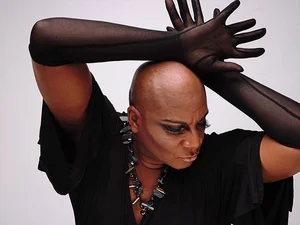
Just an Ugly Woman
I’m okay with being an “ugly” woman, y’all — for realz!
There’s some chest tightness as I dive into this one. I can feel the energy draw back as people knee jerk respond to the idea of me or anyone being considered ugly. Some of you got about two sentences in and were already in the comments to reassure me how good-looking I am. Thanks for the thought. I appreciate the sentiment. I shouldn’t need that validation and the urge people have to provide it probably has more with being in denial than a desire to comfort. That reaction is in the same ball park as color-blindness. It’s the impulse to assure someone who has a high Body Mass Index that they aren’t fat. I can be fucking ugly if I want.
We live in a society where people get labeled as unattractive, and there’s seems to be general agreement about what ugly looks like. I learned beauty the way I learned the color red. Even when I talk about Western beauty expectations as a matter of resistance, I have to have a reference in mind. I can’t describe it, but I can’t sure as hell point it out. Every time someone puts on a scary mask, they are banking on others to agree that it’s ugly and scary (okay, not equivalent, but I’m keeping it brief). I certainly have a concept of ugly and sometimes, looking at myself I see someone who fits the description.
I do not project standards. I defy standards. In that regard, I am ugly. The fact that I identify as a woman at all strikes confusion, anxiety and horror. I’ve been flat out told that I “make an ugly woman.” I’ve been told I was “clockable,” which means I do not “pass” as female. It would be unreasonable, and probably unsafe, for me to operate as if that were not the case. To write off people who think along those standards would leave me in a very very small world. That would amount to hiding. To be in the real world, I have to consider the impact of my being, in the same way people should consider the impact of their actions, regardless of their intentions.
I predict the resistance. No one is ugly. Looks don’t matter. You’re perfect the way you are. These are the rote responses we give when someone expresses doubt about the acceptability of their appearance. Those are pretty lies (literally). It’s true that people are more than the way they look. It’s also true that people who aren’t the definition of good-looking face discrimination and experience the material effects of their plainness—not getting picked. To tell that person that it doesn’t matter what they look like or, worse, to tell them that they’re gorgeous is basically gas-lightning.
No fat person ever learned to love themself by pretending they were not fat. No person of color forgets they have skin to find self-esteem under White supremacy. I have to accept the face, the age, the body, the gait that are mine and present those as the gifts they are and stop trying to see them as “beautiful.” I have to interrogate all the language associated with self-love and body-positivity. We might also stop assigning value to people, places and things based on any of these externals. Ugly doesn’t need to mean bad any more than beauty automatically denotes goodness.
Instead of trying to expand definitions of beauty to be more inclusive, perhaps I can explore more fully what it means to be ugly, which is often a catch-all word for something my eye can’t make sense of at a glance. Ugly defies what I had my heart set on having. Pretty is simple. Ugly requires discovery. Perhaps what is ugly, is simply that which requires more courage, curiosity and consideration to be appreciated for exactly what it is.
—Notorious Pink