The Privilege of Trans Prettiness
I don’t even know how to talk about “pretty” and “passing” trans privilege, y’all — for realz!
Passing privilege, as I understand it, is the ability of a person from one group to successfully “pass” as part of another, with White passing the most common I’ve encountered, with preference to those with greater proximity to Whiteness. Pretty privilege is less objective, but pervasive AF—at least in Western society. It’s generally based on Western standards of beauty (slimness, fairness, symmetry, etc.), and is often (if not always) an extension of White supremacy.
In the trans community—especially for (but not limited to) the trans feminine—pretty privilege and passing privilege are often one in the same. The most “passable” trans women are those who look like runway models and the message is broadcast across media. Trans feminine spokespersons tend to be the “prettiest” ones. Trans women folks who don’t look like supermodels are more vulnerable to harassment (including misgendering) and discrimination across all facets of their lives.
[Check out Juno Roche’s article What Is "Pretty Privilege" — & How Does It Affect Trans Women? at refinery29.com.]
I can’t hate on the Laverne Coxes, the Indya Moores and other trans women who are trailblazers just because they grace fashion magazine covers. Even mentioning them in this context feels like unfair singling out. These women are survivors and fierce advocates fir the rest of us. No doubt. I do question the continued preference for European beauty (human) standards regardless of how far one might situate oneself beyond the margins. How and why are we replicating dominant cultural modes in our safest and most progressive spaces?
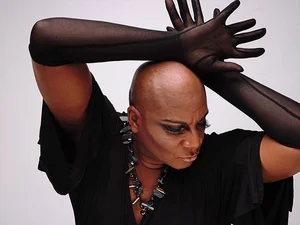
I’m a beautiful specimen of humanity regardless of perceived gender or other presentation. My identity is not based on my appearance. My appearance is just the neon sign that lets others know they have arrived at an amazing destination. I live in the sunshine of the spirit. I am enough. Sure, I wanna be cute, but I am the perfect expression of my ancestors wildest dreams today, at this moment. I have to break out of this thinking that I will only be myself when the world sees me as a bombshell. I’ve been a bombshell my whole life.
Boom, baby!