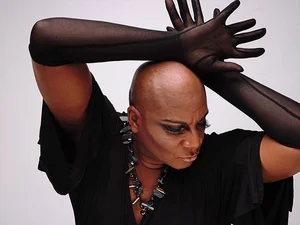
Loving Gynecomastia
I am finally coming to terms with having breasts, y’all — for realz!
If you have never heard the word gynecomastia, the clinical term for “male” breast growth, it’s no surprise. That there is even a medical name for it surprises the shit out of me. Some of you may already be tittering (no pun intended). In truth I see lots of male passing people walking around breasted. It’s like six out of ten people (more than half!) designated “male” at birth, have the genetic predisposition, estrogen levels, or other condition to spur breast growth to the extent that breast develop. Period. The majority of “men” have boobs that they could be working instead of shirking.
People get mad at me. “Can’t you do something about them?” You’d think my tits were gonna jump out and attack, the way some people react. Most people just kind of stare and drool. “Hey, you! My face is up here!” The shame I experience over having a gorgeously adorned chest has been carefully and externally constructed. I get why society is so fucked up about “men” with breasts. It debunks myths about gender altogether. The hard division between what we call male and what we call female gets blurred when we look at how little difference exists between what we label, male and female bodies. So-called female and male genitalia are actually the same parts rearranged. For example, the penis is actually an exceptionally large clitoris! Testicles and ovaries are close cousins in the gonad family and some people are born with one of each. Fact-check it!
Yes I could, if I wanted to spend the time, money and undergo the risks of surgery, I could get a mastectomy. It’s call “corrective” surgery or “sculpting.” There are hormone treatments. I could invest in compression garments. Exercise is not a solution. Building chest muscle will likely accentuate the developed chest flesh. Weight loss can have the same effect of accentuating the breast tissue as the rest of the body shrinks. I could end up wasting all my valuable resources, changing my body to help other people feel comfortable. Sure, it might help my self-esteem, but if I’m that concerned, it ain’t just my titties that are the cause. I don’t wanna go down that road.
I’ve found the most effective cure for gynecomastia has been to love my tits. I still have the impulse to hide them occasionally. It’s not so much because I’m ashamed to have cute and kissable boobies. I guess I have a similar awareness of my chest that ciswomen (more on cis another day), and trans men have. Knockers have been deemed, at least in the United States, as not for public consumption. It is still a violation in most of the US. Last I checked only six states have repealed restrictions on women’s breasts in public. In NYC, where baring breast is legally protected, you might still get harassed by the cops.
To quote adrienne maree brown, nipples are magic. If you are blessed with sensitive nipples, woohoo! Breasts are glorious, wherever they appear. My rack has brought me, and those lucky enough to encounter them, a lot of joy and pleasure. They have become a huge part of my “self-love” ritual. I call mine “two” and “three.” They are the second and third most sensitive erogenous spots on most bodies. Your breasts deserve worship and attention. There is no shame in taking pleasure if you were gifted with nipple sensitivity. Fact: Nipple stimulation lights up the same area of the brain as the genitals.
So, if you got ‘em, I say flaunt them. They are there to get attention. It’s highly likely the person who appreciates my body as it is, will know best what to do when they are gifted the opportunity to experience my body. Don’t hesitate to offer directions.