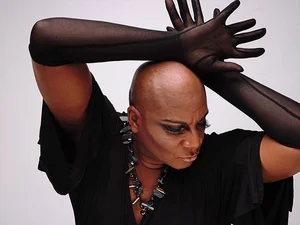
Imperfectly Non-binary
Living non-binary is progress, not perfection y’all — for realz!
Being non-binary would be so easy if it didn’t include living under a microscope part of the time, and being invisible the rest of the time. I’m exaggerating, of course. There are the amazing moments where I am just there being and not needing to argue my right to be. There are times I’m not viewed as novel or a fetish. I get a rest from begging others permission to be who I am. I have the love and appreciation of friends and family. It doesn’t totally suck to exist outside of my assigned gender. Often, even with the nagging bullshit, it’s liberating and exhilarating. This is way superior to living in hiding. Amen if you know what I’m talking about.
Perhaps it’s all in my head, but I’m not gonna sit here gaslighting myself. Facts: I am misgendered every time someone calls me sir. What recourse do I have? Should I correct every stranger who assumes by my physical appearance that I am male or a man? Should I fire my shrink, who after several months and four thousand dollars in treatment, still gets my pronouns wrong? Why do I feel inclined to explain myself to people? It’s not about feeling bad. It’s just the not knowing how to respond when it happens. I missed the class on how to de-conform my gender. I’ve spent most of my life practicing (at least publicly) exactly the opposite.
Still, it can’t be about perfection. Facts: I make mistakes. Maybe other people can spend 50+ being trained to understand gender as penis = man/ vagina = woman, and then turn around and self-re-program their headspace to operate according to a different set of standards. I embarrassingly misgender myself (especially if I am telling a story about myself in the past tense). I misgender my non-binary and trans friends, including to their faces. I feel shame at not understanding enough about gender to have a conversation that doesn’t come off as uninformed. How can I expect others to “get my gender right” when I can’t even wrap my own head around it?
I’m not complaining here. This is some really fascinating shit when you drill down. Why is it so important for me to even gender people? What crucial information does it bring to the table? Perhaps if there weren’t so many assumptions made about what it means to have a penis and/or a vagina (yes, some people have both). I’ve been ripped apart for not having the right language to talk about sex and gender. Sometimes I’m blasted for equating them and sometimes I’m chastised for even acknowledging sex or gender.
Is it possible to be unqualified to live? The contradictions. The contradictions! My guess is, all I needed to be me, my momma gave me. It can’t be conveyed or revoked. All the “act like a man,” “that’s for girls,” and “what are you” in the world make no difference when acknowledging reality. I am. Period. I experience myself and get to name/label that experience. I’m gonna just trust myself more and worry about it less. It’s not a perfect world and I’m not the only one trying to figure out who they would be if they could be their authentic self. I doubt most people know what that is. I will give them slack, but insist on their consideration.