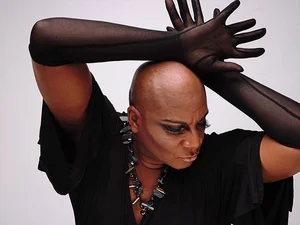
R.I.P. Cicely Tyson (1924–2021)
Cicely Tyson worked, y’all — for realz!
I’m sure there’s gonna be thousands of pieces about Cicely Tyson over the coming weeks. I wouldn’t be surprised if a biopic were to materialize on Netflix. Netflix is good at seizing a moment. That ain’t hate. Netflix gets it that life doesn’t revolve around Western-centricity. But this is about Cicely Tyson—or, at least, the impact the Cicely Tyson had on this crazy queer black radical.
When I was in elementary school we watched The Autobiography of Miss Jane Pittman. We howled with laughter as she shuffled up all bent over, mimicking the quivering mouth of an old woman at the end of the film, drinking from the water fountain that was for “whites only.” It was hilarious, while at the same time we welled up with tears because it represented something that for us was as make-believe as the make-up job done on Cicely to make her look old. The possibility of that kind of equality was as absurd and as desirable an idea as anything we could imagine in the mid-1970s.
Every year, my pre-teen ass would be on the edge of my bed, gripped, watching the movie Sounder. For me it was a movie about a lost dog. It was about so much more. I had no idea what sharecropping was, and it would be until Anna DuVernay’s 13 that I would really understand what the institution was even about. It was after watching the lesser known, but more in-depth film Slavery By Another Name, that I really got the picture. I think Sounder was for Black people, what The Wizard of Oz is for queer folks.
Then there was the Roots thing. Who’d have believed Sandy Duncan, Miss Wheat Thins, of all people would play such a despicable witch. Every Black person must have got such a thrill when “Binta”—played by Cicely Tyson—curled up her lips, in similar fashion to Jane Pitman, only instead of taking a sip of water from that tin cup, she deposited a great big gob of hawk spit, then handed the cup back to Duncan who swallowed it all down. Ill!!! I bet White folks thought twice about accepting anything to drink from a Black person. I’m probably re-traumatizing a lot of White people just mentioning it. Good!
Every time I saw Ms. Tyson in anything I was thrilled. Hearing about her joining the ancestors doesn’t sadden me at all. Mother did what she had to do! Wasn’t shit tragic about Ms. Tyson. Ms. Tyson was our (and if you don’t know who “our” is, it ain’t you) Katherine Hepburn, Meryl Streep, Liz Taylor, and Angelina Jolie. Cicely Tyson was everything. When they carted out Cicely, bitches stood at attention. It wasn’t an accident when they cast Cicely Tyson to play Viola Davis’ mother on How to Get Away With Murder. Who else was gonna give birth to such a cunning and ruthless figure as Annalise Keating?
Yes, mo’ fo’s take all y’all hats off to the one and only legendary queen, sister, actress, model, trailblazer, Emmy, Tony and Academy Award-winning, married to Miles Davis, kin to Louis Farrakhan, beauty, poise, and class personified, work until you drop ass diva! You best respect!