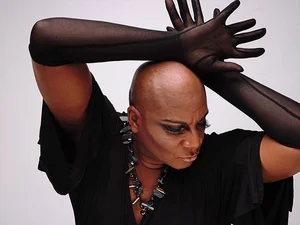
“Skytzofrenic”
I knew people had bias again those of us with mental illness, but some people can’t even hide that shit, y’all — for realz!
First of all, before some of you get all judgey, I use Scruff. If you don’t know what it is, it’s a dating app, and I’m using the term dating very loosely. To be frank, it’s a hookup app. It’s used primarily by self-defined men seeking men, but is also used by the trans and non-binary community. It’s similar to Tinder, but at least Tinder pretends to be about finding a mate more than a booty call. Tinder is actually a rip off of Grindr, another queer/gay sex app—let’s call it what it is—which I also fully admit to using religiously.
Let’s not get into the minutia. I’m a recovering sexual compulsive. I have had sex compulsively, but I also have compulsively avoided sex. I figure it balances out. I’m sure most people reading this post, either know how to get their rocks off or wish they did know. For some folks, sex may not be their “drug” of choice, but I’d bank on the fact that, when it comes to the more universal of the human urges—one built in to ensure the survival of the species—there are very few Virgin Marys out there.
Getting laid is indeed a challenge for most of us. There’s not only finding the opportunity, but the vetting—regardless of how minor—that goes on to be sure the person you are connecting with is gonna provide what you need, and not turn out to be Mr. Goodbar (look it up). That challenge goes way up when one is neurodivergent, especially if one insists on transparency. Y’all know me by now and I try to let it all hang out. It was during such an exchange that I encountered Joey. No names will be changed. No one here is innocent.
I was telling Joey about my writing and that one of my books was about addiction and the other was about finding love as a person with mental illness. Why I thought Joey would be interested is a fool’s game. Joey was looking for “a man with a since of humor” according to his profile. That should have been a red flag. Joey proceeds to tell me about his experience with a guy who was “skytzofrenic” (his spelling) and how “scary” it was. Poor thing. I assured Joey that however scary he found his time screwing a schizophrenic (I hope he noted the correct spelling), it was probably just as scary for the person with schizophrenia navigating the situation.
After attempting to school Joey on how ignorant he was coming off, without actually using the word ignorant or even being accusatory, Joey made it clear he had no interest in getting involved with someone with “psych issues.” He didn’t seem to realize that, for me, it was the equivalent of him saying, “I dated a black guy once and I’ll never do that again!” Anyway, I let Joey know I wasn’t interested in meeting anyone during COVID anyway. I was just here for the chat, as most people are these days.
I did do Joey the favor of telling him the word he meant was “sense” and not “since.”