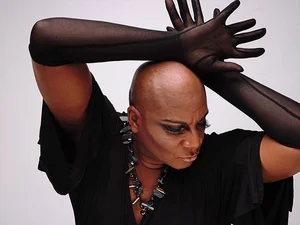
Good For Nothing Sex
Good at sex ain’t all good for nothing, y’all — for realz!
I’m trying but just not there yet. I know dismantling sex phobia, body shame and Puritan “values” is crucial work. It doesn’t liberate me from these ills. I’ve released explicit content in a social self-immolation, protesting the very fear I experience in the act itself. I hate being afraid of my body—of what can befall me if/when my body is presented against unwritten but explicit rules of conduct. At every turn I’m reminded that my body is a traitor—certainly an affront. This is not to be confused with being un attractive. A body can be found attractive and still be despised. This trans girl’s been the target of that contradiction many times.
Sex is an integral part of my life, as others have hobbies, past times, favorite shows, all kinds of ways to indulge themselves. Sex is a healthy and inexpensive way to stay active and raise my heart rate. It’s social. It’s connection. It’s adult play. I get that there’s nothing inherently wrong with sex. It just doesn’t seem to garner much respect, for something so many people have in common. There are plenty of awards for people who are good at sex, but they don’t become household names. People who engage in sex for a living are outlawed. In the few industries where open sexuality are legal, the material and access are relegated to stigmatized spaces in undesirable locations, and that’s if you can find them.
I have internalized messaging that says being good at sex is a no value proposition. I imagine it an insult to insinuate someone’s only talent might lay in the area of sex and things sensual. People known for the sexuality are controversial. Women known primarily for their sexuality are sluts. It’s a joke to consider a young person wanting to grow up to be on the pole. Condescendingly that child would be told “I’m sure you’re worth more than that.
We know sex is power. We envy people we think of as naturally having sex appeal, but only when it’s a bonus. You better be good at something else. One reason sex is good for nothing is that one cannot earn a living being good at sex (not legally in most places), so sex can’t be valuable if it doesn’t put food on the table (legally). Of course that it’s illegal means that those who would even try to make an occupation of sex must do it under dangerous circumstances. Sure, a few sex workers demand high fees, but that is a matter of their access to people with disposable income and the cost will never be more than the client in that case is willing to pay.
I’m calling bullshit. Being good at sex is a great talent to have. Anyone who has had the experience of a capable lover, knows that it is a skill that is to be much honored. I certainly have come to understand that if I want to have a satisfying time in bed (or in the park), I have to choose a lover who has put in the time to understand how different bodies work and to learn to listen deeply to what their partners’ bodies might be telling them. I also know that sex is more enjoyable when I bring my own experience, care, intuition, stamina and all the skills I’ve learned over a lifetime of serious sex (sex with a commitment to mutual satisfaction). It’s not bragging, since I won’t be getting any awards. In the current climate my sexual prowess is more likely to get me ostracized, than congratulated. Still, I am proud of it.
—Notorious Pink